
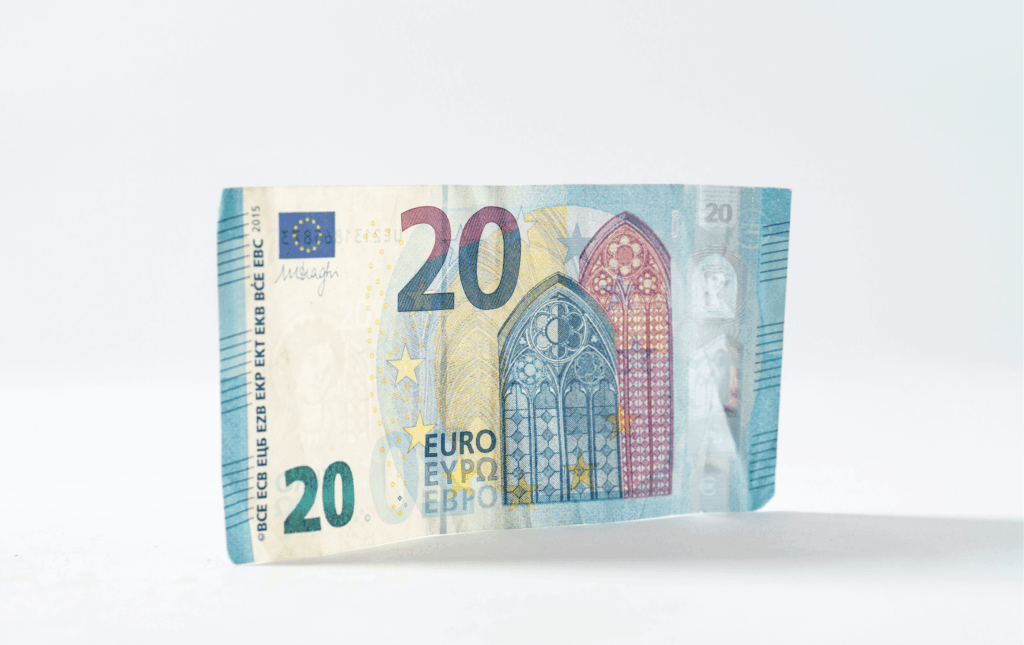
Cash is an important method of payment for all citizens, it is the legal tender that facilitates the financial inclusion of all collectives and segments of the population on an equal basis.
Cash is a symbol of freedom, and it guarantees privacy from organizations or corporations accessing personal information. Cash is also the only payment option in cases of natural disasters, cyber attacks or other technological mishaps, a secure reserve of value in the face of scams or cybercrimes.
All advanced societies should preserve access to cash money as a bulwark of fundamental rights and freedoms against the risks of financial exclusion, neglect of vulnerable collectives or in emergency situations.



The situation of cash and the defense of its role in society. Download the full presentation ⇲
1.
Cash, the most widely used
Cash money continues to be the most common form of payment, both in terms of transaction volume and in monetary value, according to the Bank of Spain.
Cash is the most used method of payment by the population, used in more than 80% of commercial transactions.
Despite the pandemic and the noticeable digitalization of payments, cash in Spain is being used at the same levels as 2 years ago. According to the Institutional Report of the Bank of Spain, in 2020 this institution provided credit entities with 2.761 billion cash bills for a value of 87.395 billion euros, 6.5% less than in 2019 but similar to 2018 and far above the amount of 2016.
2.
Symbol of Freedom
Cash money continues to be the most common form of payment, both in terms of transaction volume and in monetary value, according to the Bank of Spain.
Cash is the most used method of payment by the population, used in more than 80% of commercial transactions.
Despite the pandemic and the noticeable digitalization of payments, cash in Spain is being used at the same levels as 2 years ago. According to the Institutional Report of the Bank of Spain, in 2020 this institution provided credit entities with 2.761 billion cash bills for a value of 87.395 billion euros, 6.5% less than in 2019 but similar to 2018 and far above the amount of 2016.
1.
Cash, the most widely used
Cash money continues to be the most common form of payment, both in terms of transaction volume and in monetary value, according to the Bank of Spain.
Cash is the most used method of payment by the population, used in more than 80% of commercial transactions.
Despite the pandemic and the noticeable digitalization of payments, cash in Spain is being used at the same levels as 2 years ago. According to the Institutional Report of the Bank of Spain, in 2020 this institution provided credit entities with 2.761 billion cash bills for a value of 87.395 billion euros, 6.5% less than in 2019 but similar to 2018 and far above the amount of 2016.
2.
Symbol of freedom
Many of the initiatives against the circulation and use of cash are aimed at increasing authority and control over the economy and individuals through data that is generated by transactions.
The war against cash is definitively a war against fundamental rights and freedom of choice. Therefore, all methods of payment should have a place in society so that individuals may freely choose the most convenient option for their personal circumstances because the economic and social realities of different countries are diverse and complex and require varied alternatives of choice.
Any limits on the use of cash are, in effect, a reduction in the freedom of choice for all citizens.
In fact, a recent report issued by the UN already warns of the dangers of certain negative tendencies of digitalization that act as obstacles to human rights and fundamental freedoms.
3.
Guarantee of privacy
Without cash the rights of citizens are seriously compromised since putting limits on cash money greatly affects individual privacy.
Infringement of privacy rights is a growing concern in today’s society and paying in cash offers consumers many more guarantees of privacy than electronic payment methods.
4.
A tool of financial inclusion
Spain is a country with extremely high bank services usage but despite this fact, more and more citizens have problems obtaining bank accounts due to high fees. Without cash, these people are kept out of the system. Social and economic problems derived from the lack of access to cash in large swaths of the population are becoming more prevalent and the consequences on inequality will be very impactful.
In the last ten years, the number of bank offices in Spain has fallen almost 44%, with close to 20,000 less bank branches. The efforts of bank entities to offer mobile ATMs, mobile offices and other solutions have not been able to solve the growing problem of access to cash in the primarily rural population.
According to a report by the Bank of Spain, there are currently 1.3 million citizens that find themselves in a vulnerable situation because of the lack of access to cash due to bank branch closures. Among its conclusions the Bank calls for promoting solutions to guarantee access to cash to the population as a whole.
For its part, according to an analysis by the Coordinated Institute of Governance and Applied Economics, in 2025 approximately 6.5% of the Spanish population will have great difficulties in accessing cash and almost 3 million people are at serious risk of financial exclusion.
Therefore, cash guarantees financial inclusion in an equitable manner, especially among the most vulnerable groups that don’t have access to bank services or segments of the population that cannot use digital or electronic payment methods.
5.
Boost local business
Ensuring the availability of cash helps boost commercial activity, especially in local businesses.
Spanish businesses pay more than 500 million euros annually in card payment fees, and small businesses are hit the hardest. In fact, retail and local businesses—such as restaurants, supermarkets, and pharmacies—pay card acceptance fees that exceed the average discount rate.
In addition to these fees, businesses also bear the costs associated with the payment terminal service itself, which in many cases amounts to an average annual cost of about €100 per device, not to mention the significant increase in fees for other financial services.
In fact, trade sector organizations in Spain have recently joined forces to highlight the risks of limiting cash use for the recovery of the retail sector and the sectors and groups hardest hit by the crisis.
Without cash, many stores, bars, and restaurants are missing out on tips, which for many represent a significant source of income. For example, in the case of a taxi driver who earns 50,000 euros a year, if they accept only card payments, they will incur around 300 euros in fees annually, plus the lost revenue from tips, which can range from 500 to 1,000 euros a year. In other words, a 2% reduction in their annual revenue.
6.
Security against fraud
88% of cybercrimes correspond to electronic scams linked to digital payments. These criminal tendencies are increasingly linked to the different methods of digital payment and to e-commerce.
Although digital technology is becoming more refined, technological mechanisms that are capable of destroying and overriding security systems are more sophisticated, making risks for the user inevitable.
7.
Alternative in emergency situations
Without cash, there is no alternative to possible cyberattacks, to the failure of computer systems or to network crashes. We cannot be solely dependent on the digital world, without any safety nets. “When the elevator was invented, stairs did not disappear”.
Recent technological incidents that have affected large online platforms have revealed the risks of the lack of alternatives. When system crashes disrupt security and ongoing operations of numerous websites, e-commerce and a wide array of digital businesses, solutions that ensure the continuity of economic activity are sorely needed.
Cash is a secure asset in situations of natural disasters, cyberattacks or any technological incident that blocks access to the internet and therefore, to digital forms of payment.
Cash is the most important method of payment in contingency situations, an important value asset for citizens. The perception of cash as a safe haven becomes especially relevant in moments of crisis, disaster, or times of uncertainty, as seen during the pandemic, which led to increasing circulation of cash throughout the economic system.
8.
Cash is secure
Cash is the most secure asset against fraud and the most resistant to falsification.
Even AEAT (The Spanish Tax Agency) and other institutions recognize that at this moment, cash is not the main risk when it comes to fraud, especially when compared to cryptocurrency or other transaction methods.
Countries such as Germany show that a high use of cash can be associated with a low level of fiscal fraud. Conversely, examples such as Sweden demonstrate that a “cashless” society does not necessarily mean less fraud. In fact, in other countries like Norway, where digital payments are widely used, the black market economy is similar in size to that of Spain, according to figures from the World Bank Group.
9.
Concentration of power in large card companies and technology
We are currently seeing a worldwide movement against cash, started by large tech and credit card companies (all of them American or Asian), whose goal is to commodify and commercialize the information and data obtained through commercial transactions.
Data is the new oil and the foundation of the business of these companies, becoming even more relevant than their financial aspect.
A recent example is the use of the Covid-19 pandemic to spread baseless fears about contamination by touching cash. These attempts to take advantage of the situation were repeatedly refuted by international organizations such as the WHO or banks of reference such as the European Central Bank, the Bundesbank, the Bank of Canada, etc.
Cash is a public good to be protected and not to be placed in the hands of large private enterprises that lack proper control or oversight. We can look to the measures recently adopted by the US Administration to avoid the merging of large tech companies. The privatization of money must be avoided.